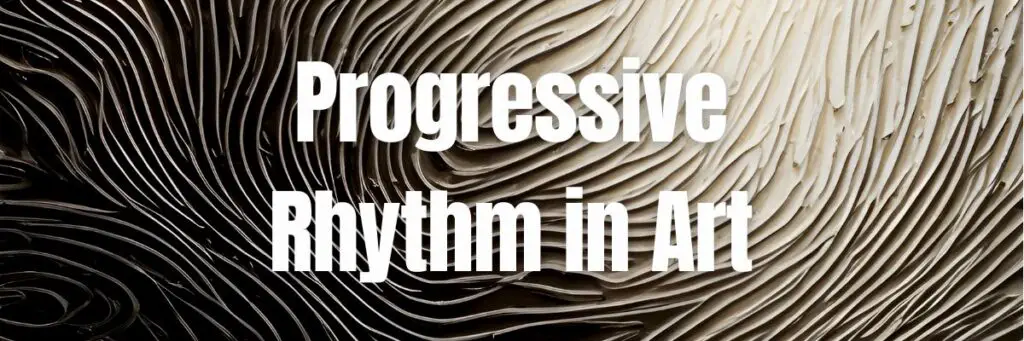
The world of art has always been an ever-evolving landscape, with artists constantly exploring new techniques and styles to express their creativity. One technique that has yet to be used is progressive rhythm in art.
Progressive rhythm is a fascinating concept in art that can give your artwork a dynamic and engaging quality.
From abstract to realism, artists use this technique to make their artwork feel alive and connected. By exploring progressive rhythm, we can gain a deeper understanding and appreciation for the artistry and creativity of these works.
This brief article will help you understand the intricacies of progressive rhythm, its key attributes, its different types, and how to incorporate it into your art.
Table of Contents
What is Progressive Rhythm in Art?
Progressive rhythm is a technique in which elements within an artwork are rhythmically repeated while gradually changing their characteristics, such as size, color, or shape, resulting in progression and movement.
The artists use it to give their compositions a sense of movement and direction. They also use repeating elements in a pattern while subtly or dramatically changing their characteristics resulting in a progressive rhythm.
Progressive rhythm is a fascinating concept in the art that can give your artwork a dynamic and engaging quality
MADHANSART.COM
.
What are the Key Attributes of Progressive Rhythm?
Artists use the following attributes to create Progressive Rhythm in their artwork. These are simple yet powerful.
Size and Proportion
One of the common ways to create progressive rhythm is by changing the size and proportion of elements as they repeat. This often creates an illusion of depth, making some elements appear closer or farther away. Based on the size and proportion, it visually creates distance and depth in the eyes of the viewers.
Color and Shade
Another way to establish progressive rhythm is by altering the color or shade of the repeating elements. This can create a sense of depth, movement, or even emotion, depending on how the colors are arranged and how they change.
Shape and Form
Progressive rhythm can also be achieved by modifying the shape or form of the repeating elements. This may include altering the angle or perspective from which the elements are viewed or transitioning from one shape to another as the pattern progresses.
What are the Different Types of Progressive Rhythm in Art?
There is no defined term as such for identifying Progressive rhythm, but based on their appearance, we can categorize them as follows:-
- Sequential Progressive Rhythm: Sequential progressive rhythm involves repeating elements in a specific order, creating a sense of direction and flow. This type of rhythm can be achieved by consistently changing elements’ size, color, or shape, resulting in a visually engaging sequence.
- Graded Progressive Rhythm: Graded progressive rhythm refers to the gradual change of an element’s characteristics as it repeats, such as transitioning from light to dark, small to large, or simple to complex. This type of rhythm can create a sense of depth, movement, or transformation, adding visual interest and dynamism to the artwork.
- Expanding Progressive Rhythm: Expanding progressive rhythm is characterized by elements that grow in size or complexity as they radiate outward from a central point. This type of rhythm can be observed in natural forms, such as the spiral of a nautilus shell or the growth pattern of a sunflower.
- Diminishing Progressive Rhythm: Unlike expanding progressive rhythm, diminishing progressive rhythm involves elements that decrease in size, complexity, or intensity as they repeat. This type of rhythm can create a sense of receding space, distance, or fading importance, adding depth and perspective to a composition.
Examples of Progressive Rhythm in Art
Three Flags (1958) by Jasper Johns
Jasper Johns’ “Three Flags” features three American flags stacked on top of one another, with each flag growing bigger as it recedes into the background. This creates a progressive rhythm through the variation in size.
X-ray of Nautilus Shell (c. 1910) by Edward Charles Le Grice
The “X-ray of Nautilus Shell” showcases a natural example of progressive rhythm, as the shell’s segments grow larger from the
inside out and smaller in reverse. The regular changes in the shape of these sections create a sense of progression.
Broadway Boogie Woogie (1942-43) by Piet Mondrian
Inspired by Manhattan’s grid patterns and jazz music, Piet Mondrian’s “Broadway Boogie Woogie” showcases a geometric yet irregular composition. The size of the squares and the position of the different colors keep changing, resulting in a progressive rhythm that guides the viewer’s eye across the canvas.
Progressive Rhythm in Nature and Everyday Life
Progressive rhythm is not limited to the world of art. It can also be observed in nature and everyday life.
For instance, the growth of tree branches or the arrangement of petals on a flower demonstrate progressive rhythm through their changing size and orientation. Video footage of a dancer, when examined frame by frame, reveals a progressive rhythm in the motion and posture of the performer.
As an artist, you should start observing the real world, and you can find different types of rhythm.
How to Incorporate Progressive Rhythm in Your Art
To incorporate progressive rhythm into your artwork, consider the following:
Experiment with Elements
To create a flowing rhythm, artists often use repeating elements. By experimenting with changing these elements’ size, color, or shape, you can create a sense of progression and movement.
Play with Perspective
The angle or perspective from which the repeating elements are viewed can also add to an artwork’s sense of movement and fluidity. Experiment with different viewpoints to create a dynamic composition.
Find Inspiration in Nature
Observing the natural world and everyday life can inspire incorporating progressive rhythm into your artwork. Take note of the repeating patterns and movements in nature and use them as a guide for your artwork.
Incorporating progressive rhythm into your artwork can enhance the overall composition and showcase your creativity and technical skills. This will allow you to express a particular concept or message.
MADHANSART.COM
Benefits of Using Progressive Rhythm
Using progressive rhythm in your art can provide several benefits:
- Creates a beautiful sense of movement and fluidity, making the artwork feel more alive and dynamic.
- Engages the viewer’s attention and evokes a range of emotions and moods.
- Enhances the overall composition of the artwork, making it visually appealing and captivating.
- Allows experimentation with different sizes, colors, and shapes of repeating elements, leading to new and unique compositions.
- It can be used in various art styles, from abstract to realistic, providing versatility in an artist’s toolkit.
- Offers a chance for artists to express a particular concept or message through movement and progression in their artwork.
Conclusion
The progressive rhythm is a powerful technique artists can use to create a sense of movement and fluidity in their artwork. Artists can create captivating and dynamic compositions by experimenting with different elements like size, color, and shape and playing with perspective.
You can find progressive rhythm in various art styles, nature, and everyday life. Incorporating progressive rhythm into your artwork can enhance the overall composition and showcase your creativity and technical skills. This for you will allow you to express a particular concept or message.
If you’re an artist looking to create engaging and dynamic artwork, consider exploring the techniques of progressive rhythm in art. Get creative, and see where this technique takes you! Start experimenting with different elements, playing with perspective, and finding natural inspiration.
